

What I’m Bringing Back from Limitless
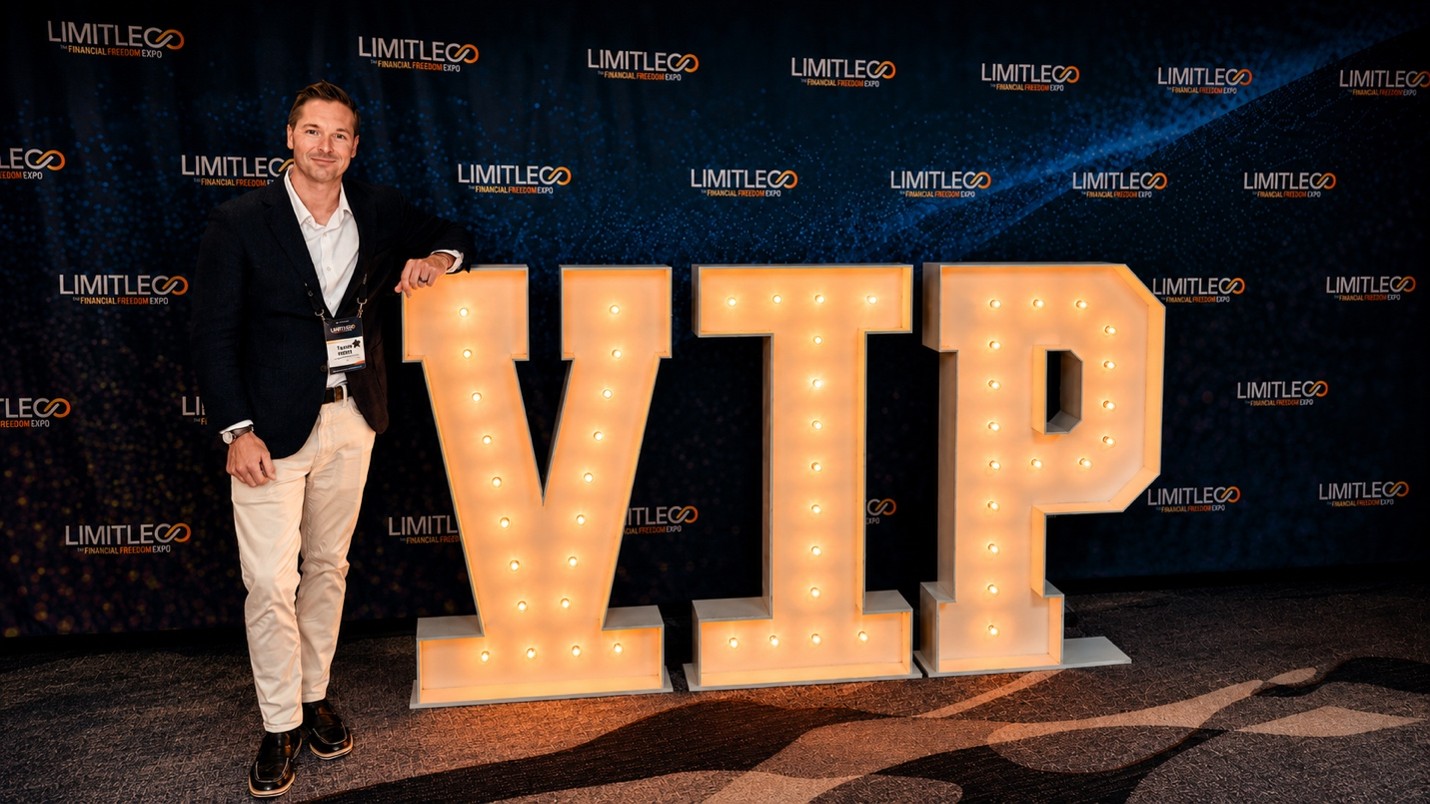
I am writing this from Phoenix after spending a few days at the Limitless Financial Freedom Expo. There has been no shortage of ideas around real estate, economics, private investing, AI, taxes, and building wealth. When I attend an event like this, I like to share ideas worth bringing home and putting into practice.
One question seemed to sit underneath a lot of the conversations this week: where do you put money when everything feels uncertain? Markets have been volatile, interest rates have changed the economics of real estate, and investors are trying to make sense of what comes next. I left Limitless thinking the answer is probably not another prediction, it is better financial education.
Financial Education Comes First
One of the most meaningful parts of the conference for me was seeing Robert and Kim Kiyosaki. I have been reading and following their work for almost twenty years, and their ideas played a meaningful role in shaping how I think about money, cash flow, investing, and financial freedom. There was also a bittersweet feeling to the session because this may be one of Robert’s last public events.
Sitting there made me think about how much influence a person’s ideas can have over someone else’s life. For millions of people, Rich Dad Poor Dad introduced a completely different way of thinking about money. I was one of them. It challenged the traditional idea that the path to financial security was simply to earn more, save more, and hope that was enough.
That is why I think financial education matters so much, especially in uncertain markets. Investors do not necessarily need more opinions. They need to understand how an investment makes money, what the risks are, who is operating it, what could go wrong, and how it fits into the bigger picture of their financial life.
That is something we lean into every day at Spartan Investment Group. The role of Investor Relations should not begin and end with offering an investment, when we have an opportunity to help people understand their options and become more informed investors over time.
Start With the Conversation, Not the Deal
One presentation at Limitless framed this in a way that stuck with me: own a conversation, not a deal. I think there is a lot of wisdom in that idea.
If investors are asking where they should put money when everything feels shaky, the first response should not be to immediately pitch whatever investment happens to be available. A better approach is to start with the question they are already asking and help them understand the landscape. Discuss diversification, cash flow, liquidity, taxes, risk, and the role private investments can play in a broader portfolio.
One of the more interesting points was how much large institutional capital has moved into private equity and other private assets instead of staying entirely in the public markets. The idea was not that everyone should copy an institution or abandon stocks and bonds. It was simply worth paying attention to where sophisticated capital is going.
Wall Street and large institutions have access to research, teams, data, and opportunities that most individual investors do not. If that group has consistently made private markets part of its long-term playbook, I think it is reasonable to ask why and what individual investors can learn from it. You do not have to follow smart money blindly, but there is value in studying how experienced capital is allocated and deciding whether some of those same principles belong in your own portfolio.
That is where education becomes important. The goal is not to convince someone that private investments are always better than public markets. The goal is to understand the advantages, disadvantages, risks, and role each can play, then make an informed decision based on your own objectives.
The investment should come after the education. First understand the investor and the problem they are trying to solve. Then decide whether a particular opportunity actually fits.
People, Process, Proof, Then Portfolio
Another framework from the conference was simple but useful: people, process, proof, and portfolio. What stood out to me was the order.
Investors often start with the property, projected returns, or the opportunity itself. I have learned to start somewhere else. Before I get interested in the investment, I want to understand the people behind it. Who are they? What have they done? How do they make decisions? Have they operated through difficult markets? Are their interests aligned with mine, and how do they treat investors when things do not go according to plan?
That framework also reminded me why I ultimately decided to join the team at SIG. Before joining the team, I was an investor with SIG. I had the opportunity to experience the organization from the same side of the table as the investors we serve today. I saw how the team communicated, how they approached opportunities, how they navigated challenges, and how seriously they took alignment with their investors.
Over time, I gained confidence in the people and the track record, but just as important was the alignment I experienced personally. I wanted to work with a group where the relationship with investors did not end once the capital was raised. I wanted to be part of a company that thought about the investor experience over the full life of an investment.
The process comes next. How are opportunities sourced and evaluated? How is risk managed? What happens when the original business plan needs to change? Then comes proof. Not simply projections, but evidence of what the team has actually done, what it has learned, and how it has performed over time.
Only then does the individual investment come into focus. I think that is a useful framework not only for raising capital, but for evaluating almost any private investment. The property matters, but the people responsible for executing the plan matter first.
AI Should Be at the Center of the Process
One of my biggest operational takeaways from Limitless was how we should think about AI. Most businesses are using AI to improve processes that already exist. They take the way something has always been done, add an AI tool, and make it a little faster or more efficient.
I think the bigger opportunity is to start over. Instead of asking where AI fits into an existing process, ask how you would build that process today if AI were available from the beginning. For me, that means looking at the Investor Education side of our business and asking whether we would communicate with investors the same way, organize information the same way, or have our team spend time on the same tasks. In many cases, probably not.
This does not mean replacing people. It means allowing technology to handle more of the repetitive work so people can spend more time where they add the most value. AI can help organize information, identify investor interests, summarize data, and improve follow up. Our team can then spend more time building relationships, educating investors, applying judgment, and having meaningful conversations.
The goal is not simply to say “we use AI,” but rather to create a better experience for investors.
What I’m Bringing Back to SIG
I am not leaving Limitless with a prediction about where markets are headed next. I am coming back with more conviction around how we should operate regardless of what happens next.
We should lead with education rather than a pitch. We should start with the questions investors are already asking and help them understand their options. We should continue putting people, process, and proof ahead of the investment itself. We should pay attention to how sophisticated investors are allocating capital in 2026. We should also rethink how we use AI, not simply as another tool, but as something that can fundamentally improve how work gets done.
Most importantly, we should continue earning trust before asking for capital. Nearly twenty years after first reading the Kiyosakis, that may be the idea that ties everything together for me. Financial freedom usually starts before the investment is ever made. It starts with learning to think differently about money and making better decisions with the information in front of you.
In uncertain times, financial education may be one of the most valuable assets an investor can have.